




























Moving into a home with a gas fireplace often comes with no manual, no service history and a remote nobody can find. Plenty of owners in Edmonton start from exactly there. Whatever brought you to a search for “Valor gas fireplace repair”, the questions on this page are the ones homeowners raise again and again about gas fireplace troubleshooting and repair, answered the way a technician would explain them while kneeling in front of your fireplace, safety steps included.
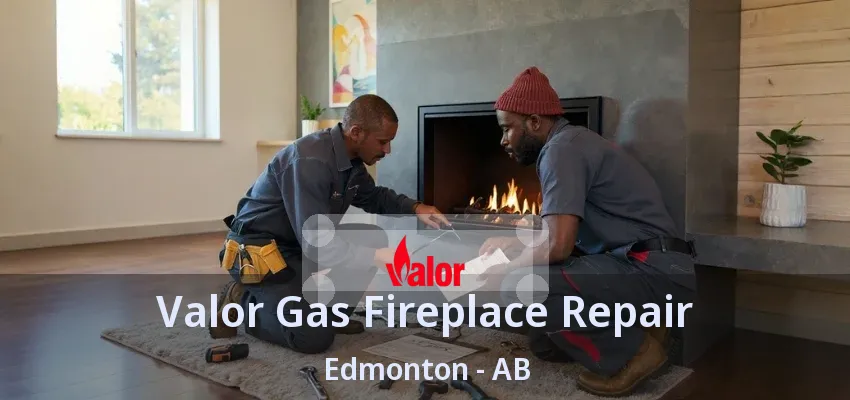
What can stop a remote from controlling your gas fireplace?
Most remotes that stop working have a simple cause, usually power or pairing, and remote complaints are among the most frequent calls we get. Receivers are often tucked into the warm space under the firebox, and their batteries drain faster there than people expect. A handheld that was dropped, or fresh batteries inserted the wrong way round, can also lose its link. We check battery voltage at both ends, confirm the receiver switch setting and resynchronize the pair. If that fails, we test whether the valve responds when the receiver is bypassed, which tells us whether the fault lies in the remote system or in the fireplace itself. Sometimes a worn receiver simply needs replacing.
Why is there a delay between pressing the button and the fire lighting?
A short delay is normal on many fireplaces with electronic ignition, because the system first proves the pilot before opening the main burner valve. That sequence often takes a few seconds and may include clicking. A delay that grows longer over time, many clicks before lighting or a soft whoomp when the burner catches suggests a problem: weak batteries, a dirty igniter or pilot, or a flame sensor that is slow to confirm the flame. On some remote systems, a weak handheld signal adds a pause too. Note how long the delay lasts and whether it has changed, and share that when you book a visit.
Why does gas fireplace glass crack, and can it be replaced?
Fireplace glass usually cracks from heat stress, an impact or a problem with how it was mounted. A cold drink spilled on hot glass, a toy thrown against it, a frame that was overtightened or flames striking the glass from misplaced logs can all do it. Cracked glass should not be used, since the firebox is no longer sealed and the panel could fail further while hot. Replacement glass must be the heat-rated assembly specified for your fireplace, never ordinary window glass, and it needs a proper gasket seal. A “Valor gas fireplace repair” visit can confirm the right part and install it safely.
Is a dusty smell from a gas fireplace normal after months off?
Most odors we are asked about at the start of the season come from dust cooking off hot surfaces. Over the warmer months, fine particles settle on the logs, the burner and the heat exchanger, and the first few fires bake them away. What we want homeowners to tell apart is the type of smell. Dust smells like a hot iron or a space heater switched on for the first time in a while. Gas smells like rotten eggs or sulfur. The first is a nuisance that fades within a few uses; the second means getting out of the house and phoning the utility from a safe spot outdoors.
What should you do if you smell gas near a fireplace?
If you smell gas near a fireplace, leave the home right away and call the gas utility, your propane supplier or 911 once you are outside. The rotten-egg or sulfur odor is added to the fuel on purpose so that leaks get noticed. Do not switch lights, the fireplace or any appliance on or off, do not use a phone indoors and do not try to find the source. Get people and pets out and stay at a safe distance until the utility says it is safe to go back in. A qualified gas technician should repair the fireplace before it is used again.
How should gas fireplace logs be arranged?
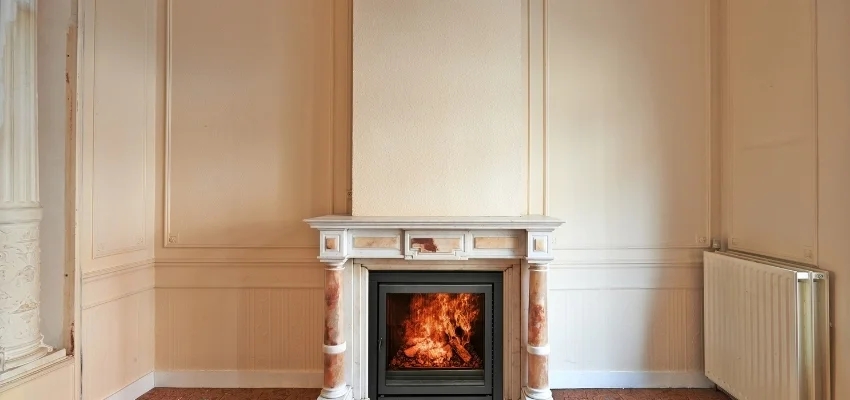
Logs should go back exactly where the diagram puts them, because from our side placement is part of how the burner works, not decoration. The flame has to rise through gaps between the logs; if a log blocks that path, combustion suffers and soot follows within days. We often find logs that were shifted during cleaning, bumped when the glass came off or rearranged for a fuller look. Resetting them to the diagram usually fixes the flame on the spot. Ember material, glass beads and stones follow the same idea: they belong only where the manual says. When logs have cracked or started shedding fibers, we replace them with parts intended for that model.
How often should a gas fireplace be serviced?
Once a year suits most of the fireplaces we see, and what we find during each visit fine-tunes that. If we pull a lot of dust and pet hair from the burner area, the household may benefit from a second check partway through the season. If the unit is barely used and comes back clean, yearly is plenty. What we discourage is waiting until something breaks, because by then a weak sensor has usually been failing for a while. A short log taped inside the access panel, listing each visit and any parts replaced, shows at a glance how the fireplace is aging.
Why do prices for gas fireplace troubleshooting and repair differ between homes?
Two things drive most of the price we give: time on site and parts. A clean, accessible fireplace that only needs routine service is quick. Diagnosis takes longer when a fault comes and goes, because we may need to run several cycles to catch it in the act. Parts are the other big variable, and they depend entirely on the make and model printed on the rating plate. Some components are widely stocked; others have to be ordered in. We would rather walk you through those factors before starting than surprise anyone afterward, so we ask about the fireplace and its symptoms first.
Do homes with a gas fireplace need more than one carbon monoxide alarm?
Alarms belong near bedrooms and on every floor, and we ask about them at nearly every gas fireplace visit because they are the only reliable way to know if exhaust ends up indoors. A well-kept, properly vented fireplace should not cause a problem, but vents can be blocked by nests and seals can fail without warning. In the homes we visit, the gaps we see most are alarms missing from bedroom hallways, units with dead batteries and alarms well past their replacement date. Pressing the test button once a month takes seconds. Combination smoke and carbon monoxide alarms are a convenient choice where only one device fits.
Seen something you want us to look at?
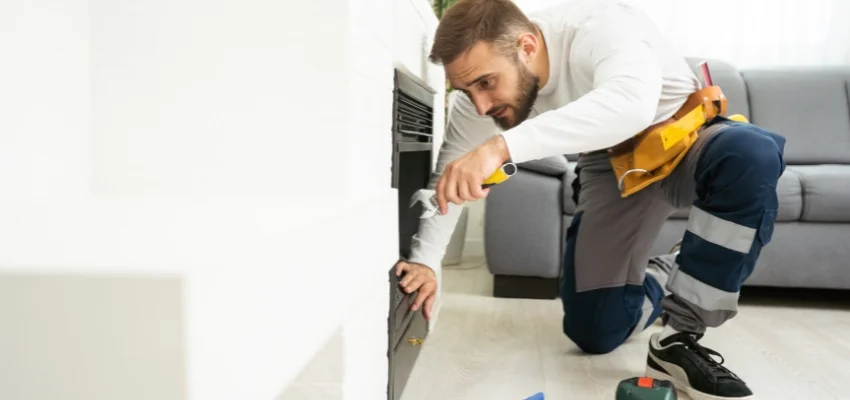
Whether it is a sound, a stain or something you spotted while cleaning, mention it when you contact us so the technician knows where to start. Describe what you noticed and Gas Fireplace Edmonton will follow up about gas fireplace troubleshooting and repair for your home.
