

































Wood heat is simple in principle: the fire burns in the box and the smoke rises up the chimney. Keeping it that simple takes a clean flue, sound masonry and parts that seal the way they should. If “wood burning fireplace inspection” was your search, here is what households around Edmonton usually want to know about wood-burning fireplace inspection, explained in a straightforward way, so you can decide what your own fireplace needs.
Is regular service on a wood-burning fireplace or stove really necessary?
Regular care catches problems that build slowly and out of sight, and a fireplace that has gone years without a visit shows exactly that pattern. The flue carries a crust of creosote, the cap is clogged with leaves or missing, and joints in the firebox have eroded from repeated heating. None of it happened overnight, and most of it would have been a simple fix earlier on. Neglect also hides things like a cracked flue tile or a rusted damper, which only show up when someone looks. Routine service is really about knowing the condition of a system you trust with an open flame indoors.
Why does a wood fire need a closer look than a gas fireplace?
Wood fires leave residue, throw sparks and run hotter at the firebox walls, so more can go wrong between visits. Creosote builds up in the flue with every fire, embers can escape onto the hearth, and firebrick and mortar wear from direct flame. Gas fireplaces have their own checks, mainly on burners, valves and venting, handled by a qualified gas technician. For a wood burning fireplace inspection, the focus is on creosote levels, the condition of the firebox and flue, clearances to anything that burns and how well the hearth protects the floor in front.
What clearance problems turn up when wood fireplaces are inspected?
The most common ones involve wood or other combustible materials sitting too close to the heat. Mantels and decorative trim mounted close above or beside the opening, hearth extensions that are too short or rest on wood without proper protection, and framing touching the chimney in the attic all come up regularly. So do rugs, furniture and stored firewood placed near the opening. Heat can slowly char wood over years without visible flames. A “wood burning fireplace inspection” report should note each clearance concern and what it would take to correct it.
Which events call for a fireplace inspection?
A common guideline is to have a wood-burning fireplace inspected once a year, ideally before the heating season, plus at a few specific moments. Those include buying or selling a home, after a chimney fire, a lightning strike or a severe storm, before using a fireplace that has sat idle, and when you change how you burn, for example by adding an insert. An inspection also makes sense whenever you notice smoke in the room, odors, water stains or loose masonry. Pairing the yearly inspection with a sweep keeps it to a single visit.
What are the signs of a chimney fire?
A chimney fire often announces itself with a loud roaring or rumbling sound, popping and cracking noises, thick smoke and a strong, hot smell, sometimes with flames or sparks shooting from the top. If you notice these, get everyone out of the house and call the fire department from outside. Not every chimney fire is dramatic, though. Slow-burning ones can go unnoticed and leave quieter clues: flaky, puffed-up creosote, a warped damper or cap, cracked flue tiles and debris on the roof or ground. After any suspected chimney fire, have the system inspected before it is used again.
What is checked when a wood-burning fireplace is inspected?
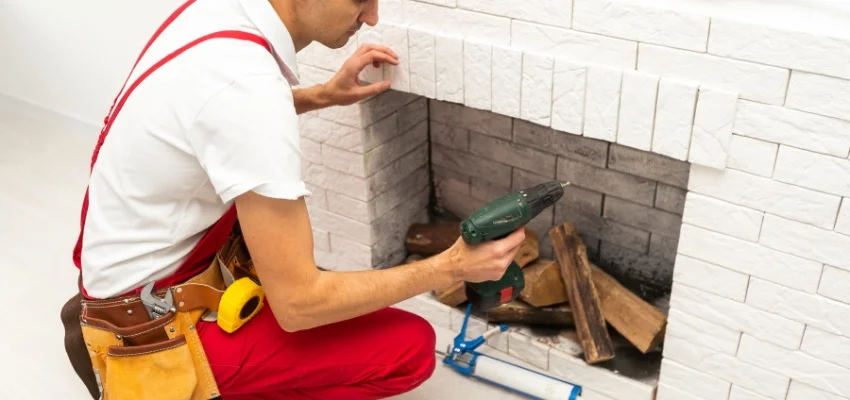
A fireplace inspection checks every accessible part of the system for damage, blockages and unsafe setup. That usually covers the firebox, firebrick and mortar, the damper, the smoke chamber, the visible flue liner, the hearth and the area around the opening, plus the chimney exterior, crown and cap. The technician also looks at how close mantels and wood trim sit to the opening and whether the hearth in front extends far enough. A camera often helps with hidden parts of the flue. You should receive clear findings, ideally with photos, that separate urgent issues from items to watch.
How long will the technician be at your home?
One to two hours covers most cleaning and inspection visits we make, with the chimney deciding which end of that range applies. Setup and floor protection take a few minutes, brushing takes the bulk of the time, and clean-up plus a walkthrough close things out. Tall chimneys, steep roofs and several flues stretch the visit, as do thick layers that need extra passes or special tools. Repairs are their own matter: a damper handle may be fixed on the spot, while firebrick or crown work gets a separate appointment. Since time shapes the price, an accurate description up front helps everyone.
What should you check before the first fire of the season?
Check the parts that sat untouched all summer, the alarms and the wood supply; our own pre-season list is that short. Dampers can rust or stick, so work them open and closed. Caps and screens may have gathered leaves or a nest. Glass door latches and stove gaskets should still close snugly. A carbon monoxide alarm with a dead battery protects nobody, so test it. Then comes the fire itself: dry kindling, seasoned logs and a modest first burn while you watch how the smoke behaves. If it rolls into the room or smells odd, let it die down and call for a check.
What should you do with the findings from your wood-burning fireplace inspection visit?
If a fireplace does not pass an inspection, the technician has found something to fix before the next fire, and the report should say exactly what. Findings usually fall into three groups: issues that make the fireplace unsafe to use now, repairs to plan soon and items to watch. Stop using the fireplace for anything in the first group, such as cracked flue tiles, gaps in the firebox or a blocked chimney. Ask for photos, a written description and a repair quote for each item, and get a second opinion on major work if you want one.
Looking for a second opinion?
If another company gave you a recommendation that does not feel right, we are happy to take a fresh look. You will get our honest view of your fireplace, with no pressure either way. Ask Gas Fireplace Edmonton for a second look in Edmonton.
